

It can feel overwhelming when you are planning to demolish a house along the NSW South Coast. Understanding the process and knowing what’s involved can help you make informed decisions and avoid costly mistakes.
This guide walks you through the various types of house demolition South Coast and explains permits, safety requirements, and waste management.
Types of House Demolition South Coast
South Coast house demolition doesn’t always mean completely removing the building. The demolition approach depends on your plans for the property.
Complete House Demolition
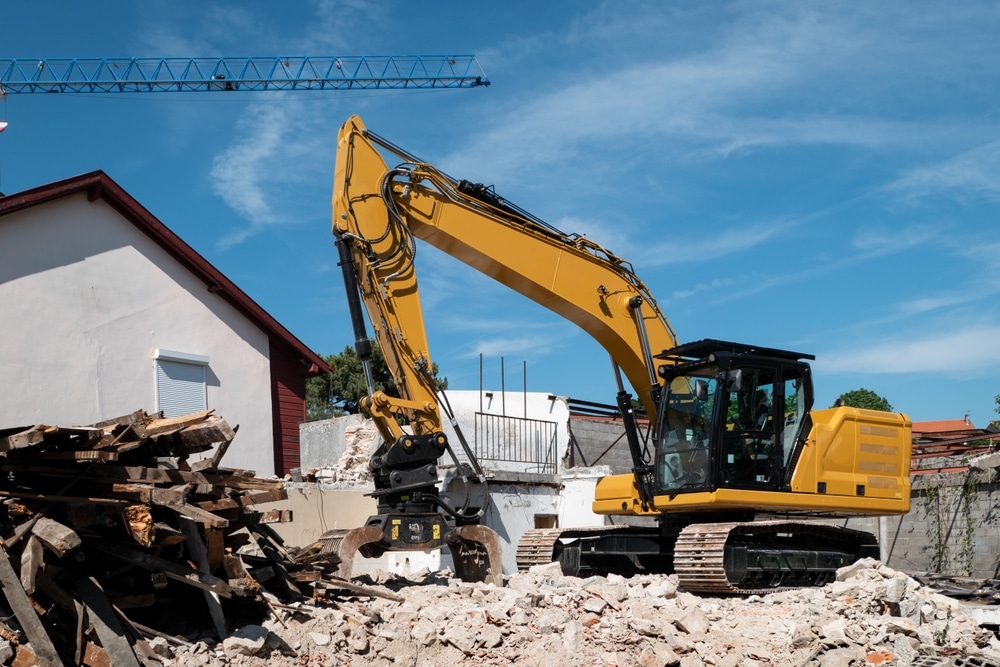
A full-house demolition completely removes the foundation slab, leaving a cleared block.
- Everything is demolished and removed, including the frame, walls, and sometimes the foundation.
- You need a cleared block if you plan to rebuild, divide the property, or if the building is damaged or unsafe. You need a cleared block if you plan to rebuild, divide the property, or if the building is damaged or unsafe.
- Multiple structures on a single property (house, shed, garage) can be removed as part of one demolition project.
Partial Demolition
When you only need to remove sections of a house while keeping other parts intact.
- Selectively remove areas such as extensions, second storeys, or damaged sections, leaving the rest of the building untouched.
- Your local council may require that the facade be retained on a heritage property, so partial demolition is the only option.
- Load-bearing walls often require temporary support during construction to ensure worker safety.
Internal Strip-Out
An internal strip-out removes everything inside whilst keeping the rest of the building intact.
- All, or selected, fixtures, fittings, walls, ceilings, and floors are removed.
- Utilities and services, such as plumbing, gas and electricity, may be disconnected and stripped out
- The external walls, roof structure, and building shell remain.
- This approach can be less expensive than complete demolition when the building’s external structure is sound
Preparing for Residential Demolition South Coast
Good preparation will lead to a well-managed, safe and efficient house demolition project.
- Asbestos surveys must be conducted for any home built before 1990, as asbestos-containing materials (ACMs) were commonly used for construction and renovation before their use was banned.
- The initial inspection is carried out by a licensed professional. Their report will be used to apply for local authority approvals, to develop a demolition plan, and to calculate the price.
- An assessment of the building to be removed will help determine the safest demolition sequence.
- An Environmental expert may identify contaminated soil, hazardous materials, or protected vegetation that could affect the project schedule and cost.
- Your inspector will review access points to satisfy themselves that heavy equipment and trucks can enter and exit the site.
Understanding Residential Demolition Requirements in NSW
Before any demolition work begins on your South Coast property, you need to comply with the legal requirements applicable to your town or suburb. These regulations are in place to protect you, your neighbours, and the community.
Do You Need a Demolition Permit?
Most house demolitions in NSW require approval.
- You and your demolition contractor must submit paperwork to the local authority, including planning certificates, site plans and a waste management plan detailing your intentions to recycle where possible.
- Development Applications (DA) are typically required for projects involving heritage properties, large structures, or sites with environmental considerations.
- Complying Development Certificates (CDC) for straightforward residential demolitions are a faster pathway, typically approved within 10-20 days.
- Each council from Wollongong to Shoalhaven may have specific requirements, so demolition contractors with local experience will be an asset during the ‘approvals phase’.
Disconnecting Services
All utilities must be safely disconnected before your project starts.
- Electricity disconnection is done by authorised electrical contractors or your power provider.
- Licensed gasfitters ensure your gas service is terminated and the lines are capped safely.
- Water and sewerage must also be disconnected by licensed plumbers, with services capped at the property boundary.
- Telephone and NBN cables should be removed to prevent damage.
Safety Considerations During Residential Demolition
Demolition work may involve heavy machinery, falling materials, and hazardous substances. All risks are to be managed by professionals.
Asbestos Management and Removal
Asbestos is one of the most serious hazards in residential demolition.
- Every property must have an asbestos inspection before any demolition work begins, no matter when it was built.
- Only licensed asbestos removalists can legally remove asbestos.
- SafeWork NSW must be notified at least five days before asbestos removal
- Areas where asbestos is suspected must have safety measures in place, such as personal protective equipment for workers, containment to prevent fibre release , and air monitoring.
- You must have received a clearance certificate from an independent assessor before demolition can proceed after asbestos removal.
Site Safety Protocols
Professional demolition contractors understand the importance of site safety to protect workers and your neighbours.
- Perimeter fencing and barriers are erected to prevent unauthorised access and contain dust and debris.
- Warning signs are put up.
- Workers must wear personal protective equipment, including hard hats, safety boots, high-visibility clothing, and respiratory protection when required.
- Dust suppression through water misting helps control airborne particles.
- Council regulations often restrict working hours in residential areas to weekday daylight hours.
Waste Management
Professional and eco-friendly house demolition: South Coast contractors view waste materials as resources rather than waste, aiming to avoid landfill by recycling and reusing.
Sorting and Separating Demolition Materials
Waste management involves on-site sorting, separating materials by type for recycling or disposal.
- It’s faster and more efficient to sort waste throughout the demolition than having to deal with a big pile of mixed waste at the end.
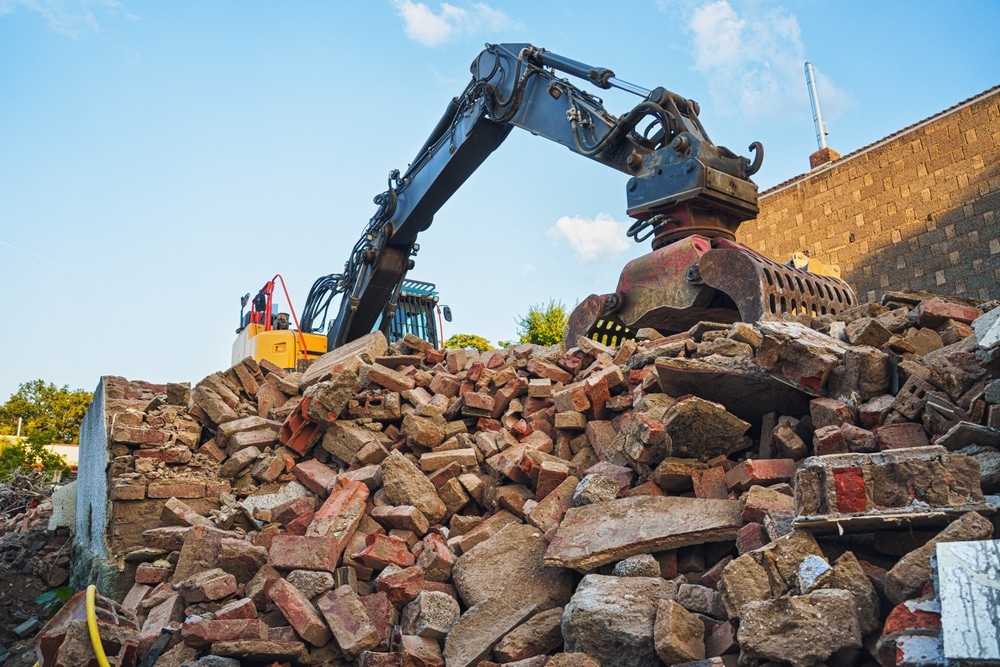
- Concrete, bricks and masonry can be crushed and recycled into road base or aggregate.
- Timber in good condition is salvaged for reuse, while remaining wood is chipped for mulch
- Metal components, such as structural steel, roofing, and pipes, are valuable scrap for resale.
Responsible Waste Disposal
Other waste is disposed of at facilities meeting environmental regulations and licensing requirements.
- Licensed waste disposal facilities ensure materials are handled according to EPA regulations
- Hazardous materials require special handling and disposal through certified facilities
- Waste tracking documentation provides proof of responsible disposal, protecting you from potential liability
Ready to Start Your Residential Demolition South Coast Project?
Whether you’d like to rebuild in Helensburgh, subdivide in Shellharbour, or clear land in Ulladulla, choosing licensed professionals with local knowledge protects your property and ensures a fast, safe project.
At South Coast Demolition, we have extensive experience in residential demolition across the region and are committed to safety and environmental best practices.
Ready to discuss your house demolition plans? Visit our
residential demolition services page
for detailed information about our services and to request a free, no-obligation quotation for your South Coast property.





Leave A Comment